
Employee Participation as a Foundation for Human Rights
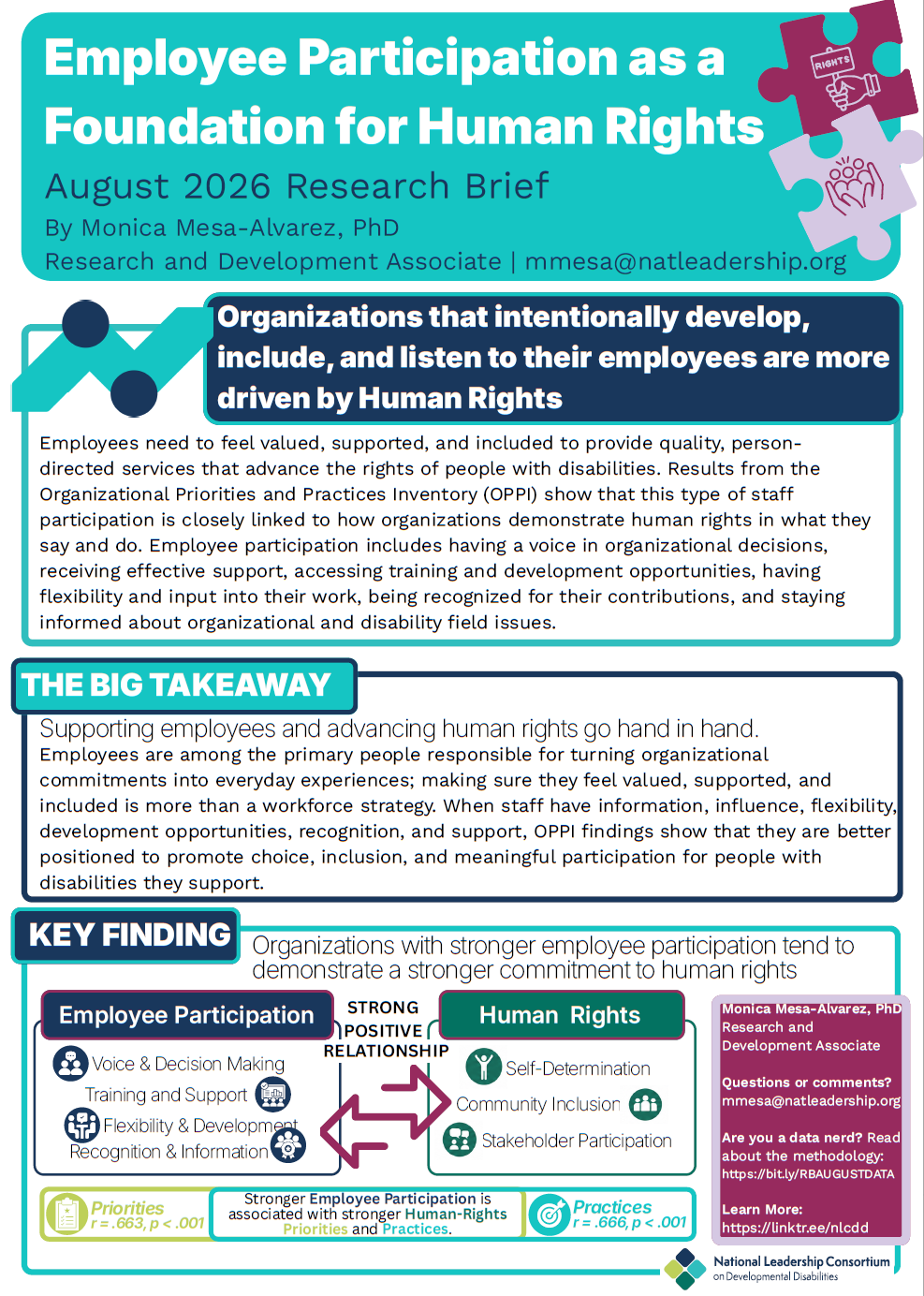
Published: August 11, 2026Employee participation is often treated primarily as a workforce issue, but this research brief shows that it is also closely connected to human rights. Drawing on findings from the Organizational Priorities and Practices Inventory (OPPI), the brief examines how employee participation relates to organizational commitments and practices involving self-determination, community inclusion, and stakeholder participation. Results show strong positive relationships between employee participation and both human-rights priorities (r = .663, p < .001) and practices (r = .666, p < .001).
Employee participation includes having a voice in organizational decisions, receiving effective supervision and support, accessing training and development opportunities, having flexibility and input into one’s work, being recognized for contributions, and staying informed about organizational and disability-field issues. The brief explains why these practices matter and offers concrete actions disability leaders can take, including sharing decision-making power, strengthening training and professional development, recognizing staff, including employees in strategic and financial decisions, and keeping staff connected to developments across the disability field. Treating workforce development and human-rights strategies as interconnected can help organizations build stronger, more sustainable, and person-directed services.
Want to learn more about how this study was conducted? Download our additional methodology resource
Additional Resources