
Research and Leadership Briefs

The National Leadership Consortium has been collecting data from the graduates of its 100+ Leadership Institutes and programs for more than 17 years. Our database houses information about trends in the field, impact of our programs, and perspectives from more than 2,500 leaders of disabilities organizations across the nation

We are pleased to analyze and deliver the results of this longitudinal research in bite-sized, easily digestible portions in our one- or two-paged research briefs! In addition, we offer one- to two-page leadership briefs that highlight skills and strategies relevant to leaders in our field and system. Check them both out below!
  • July 2025 Research Brief: Where Are Leaders Learning About Leadership?

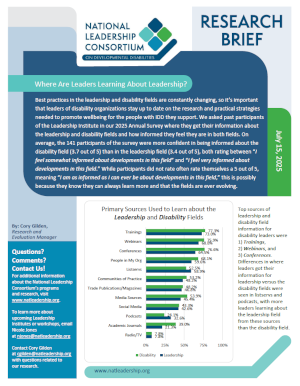
    Best practices in the leadership and disability fields are constantly evolving. To understand how leaders stay informed, the brief uses data from the 2025 Annual Survey with responses from 141 alumni of the Leadership Institute. Participants reported feeling more informed about the disability field than the leadership field, with top information sources including trainings, webinars, and conferences. The brief also highlights the value of peer networks, listservs, and communities of practice in supporting continuous learning. Understanding where leaders are getting their information can help organizations, educators, and researchers better connect and support leadership development in the disability field.
    Download File
    More Details
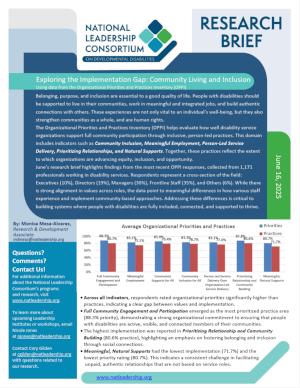
  • June 2025 Research Brief: Exploring the Implementation Gap: Community Living and Inclusion

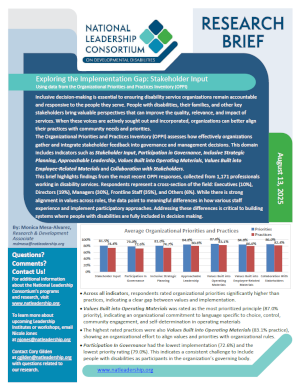
    This month’s brief explores new findings from the Organizational Priorities and Practices Inventory (OPPI), drawing on input from over 1,100 disability service professionals across the U.S. The focus is on how organizations are supporting people with disabilities to live, work, and belong in their communities. The data reveal strong alignment in values but also highlight persistent gaps between what organizations prioritize and what they put into practice, especially around natural supports and employment. Explore the full brief to see how roles across the field perceive community inclusion, and where improvements are still needed.
    Download File
    More Details
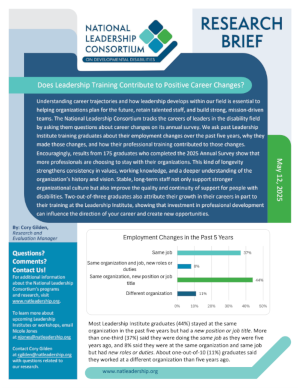
  • May 2025 Research Brief: Does Leadership Training Contribute to Positive Career Changes?

    Understanding career trajectories and how leadership develops within our field is essential to helping organizations plan for the future, retain talented staff, and build strong, mission-driven teams. Find out about the employment changes of Leadership Institute graduates over the past five years, why they made those changes, and how their professional training contributed to those changes in this research brief!
    Download File
    More Details
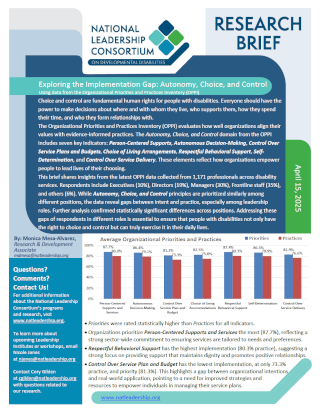
  • April 2025 Research Brief: Exploring the Implementation Gap: Autonomy, Choice, and Control

    The April research brief, Exploring the Implementation Gap: Autonomy, Choice, and Control, presents findings from over 1,100 disability services professionals. While organizations strongly prioritize person-centered supports, the data reveal gaps in implementation around control over service plans and budgets. Executives and directors report the largest disconnects between values and practice, highlighting the need for better strategies to ensure real choice and control for people with disabilities.
    Download File
    More Details
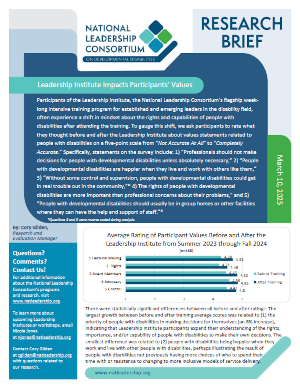
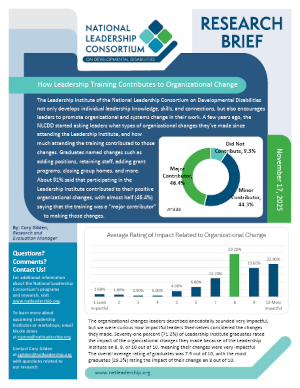
  • March 2025 Research Brief: Leadership Institute Impacts Participants’ Values

    Participants of the Leadership Institute often experience a shift in mindset about the rights and capabilities of people with disabilities after attending the training. To gauge this shift, we ask participants to rate what they thought before and after the Leadership. Find out how 2024 participants changed their thinking by reading this Research Brief.
    Download File
    More Details
  • February 2025 Leadership Brief: Leading a Happy Organization

    Leaders are critical to fostering (or getting in the way of) happiness at work. Happier workplaces are more productive, more engaged, healthier, and have higher tenure rates. The strategies in this Leadership Brief can help you build happiness across your organization.
    Download File
    More Details
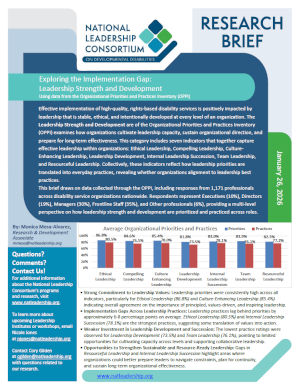
  • February 2025 Research Brief: Differences in Organizational Priorities and Practices by Positions

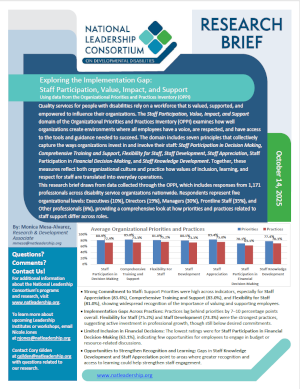
    The February research brief explores the gap between organizational priorities and practices across different employees’ positions. This brief presents the most recent OPPI data collected from 1,171 professionals with different roles and organizations in the disabilities system. About 10% of respondents are Executives, 19% are Directors, 30% are Managers, 35% are Frontline, and 6% are employees in other positions who do not support people with disabilities directly or indirectly. The piece describes consistently high priorities across all roles, with some differences in principles such as Staff Participation, Values, Impact, and Support. Also, there are notable trends across roles and ratings of organizational practices, with Frontline staff consistently rating practices higher than executives and directors. Learn more about how employees at different levels perceive organizational priorities and practices!
    Download File
    More Details
  • December 2024 Research Brief: Average Rating of Usefulness of Leadership Institute Content

    How useful are the things learned at the Leadership Institute? Results from the post surveys of 2024 Leadership Institute graduates show that they find the topics of the Leadership Institute to be very useful to their work. Read the research brief to discover which topic area they found most useful!
    Download File
    More Details
  • November 2024 Leadership Brief: Leadership Can Be Lonely, But We Can’t Do It Alone

    Research shows that when leaders have strong personal and professional networks, they tend to be more engaged, innovative, and effective. This Leadership Brief highlights four key relationships for leaders to prioritize, especially when their leadership roles feel challenging or lonely.
    Download File
    More Details
  • November 2024 Research Brief: Autonomy Choice and Control

    The November research brief on the Organizational Priorities and Practices Inventory (OPPI) area of Autonomy, Choice, and Control reveals that while organizations prioritize person-centered approaches and autonomous decision-making, there remains a significant gap between these priorities and actual practices—especially in empowering individuals to control their service plans and budgets. Findings from the OPPI show that although organizations rate autonomy as essential, the implementation often falls short, with a 9% difference on average between priorities and practices. Addressing these gaps could enhance service quality, dignity, and independence for people with disabilities.
    Download File
    More Details

Sign up for Resources, Info, & Research from NLCDD

Receive updates on programs, research insights, leadership tools, and opportunities to engage with NLCDD.